
This paper analyzes the Happy Consciousness exhibited by orthodox economists that all is structurally OK in our economy based on the renting or hiring of person–although reforms are needed. The limits of their profiles in moral courage is to suggest more taxes on the super-rich.
Is “Capitalism” a Misnomer?
May 4, 2026 by
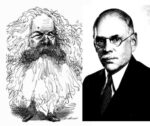
This is a paper on Marx’s notion of “capitalism” and Frank Knight’s notion of “civilization” and why both leave much to be desired.
Historical and Modern Arguments Against Contractual Slavery
February 8, 2026 by

This is a preprint of: Ellerman, David. 2025. “The Historical and Modern Arguments Against Contractual Slavery.” In The Palgrave Handbook of Modern Slavery, edited by Maria Krambia Kapardis, Colin Clark, Ajwang Warria, and Michel Dion. Palgrave Macmillan. https://doi.org/10.1007/978-3-031-58614-9_9.
Historical Copies of ICA Model By-Laws for a Worker Cooperative
December 23, 2025 by

These copies of the Industrial Cooperative Association (ICA) Model By-Laws go from an early version from the late 1970s to the mature version in the early 1980s. Also included are a report from the late 1980s on how to set up a democratic worker ownership trusts written for Zimbabwe plus a law journal article on the 1982 Massachusetts law on Employee Cooperative Corporations.
Marginal Productivity Theory versus Labor Theory of Property
November 11, 2025 by
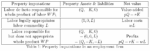
This paper shows that MP theory can also be formulated in a mathematically equivalent way using vectorial marginal products–which however conflicts with the “distributive shares” picture.
On Employee Ownership Trusts (EOTs)
October 30, 2025 by
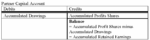
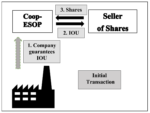
This paper explores the Employee Ownership Trust (EOT) model, comparing it with traditional partnerships and employee ownership structures like the US ESOPs and the European Coop-ESOPs.
Market Valuations are Inappropriate for Employee-Owned Firms
October 11, 2025 by

Any `fair market valuation’ of an employee-owned firm or partnership that assumes those future residuals accrue to the current shareholder/residual-claimants is inappropriate.
Classical Liberalism and the Abolition of Certain Voluntary Contracts
May 19, 2025 by
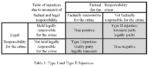
This paper analyzes three contracts and shows that there is indeed a deeper democratic or Enlightenment classical liberal tradition of jurisprudence that rules out those contracts. The ‘problem’ is that the same principles imply the abolition of the employment contract, the contract for renting human beings, which is the foundation for the economic system that is often (but superficially) identified with classical liberalism itself. Frank Knight is taken throughout as the exemplary advocate of the economics of conventional classical liberalism.
Fallacies about corporations
March 15, 2025 by
This article comments on Isabelle Ferreras’s “Democratizing the Corporation.” The focus is on the conceptual framing, which arguably contains a number of problems that are quite common on the left and are thus doubly deserving of commentary and explanation.
Tocqueville and Employee Ownership
March 15, 2025 by

There seems to be two rather different philosophies of aid to development and poverty relief. (1) The progressive/social-democratic approach is for the government or aid agencies to do more and more good things for people. (2) The classical-liberal approach is to change the underlying conditions so that people are empowered to do good things for themselves. In this paper, we analyze Alexis de Tocqueville’s approach to these questions in his First Memoir and his (unfinished) Second Memoir on Pauperism.